Some businesses earn most of their revenue in a handful of minutes. A concert goes on sale at 10am. An airline drops a flash fare. An online gaming tournament opens its entry window. A Champions League final is minutes from kickoff, and thousands of players top up their wallets before the markets lock.
In each case, payments that would normally arrive over a day arrive in a narrow window, and every one of them is time-boxed. A ticket that isn't paid for is released to the queue. A wallet top-up that fails five minutes before kickoff is a stake that never gets placed. The user rarely waits for a retry. If they hold accounts on more than one platform, the money simply moves to a competitor, and often the user does too.
That's why businesses with event-driven demand should look hard at one number when they evaluate a payment orchestration provider: peak TPS, the transactions per second a platform can sustain when everyone pays at once. And they should look even harder at what happens to approvals and latency at that peak.
Why peak TPS is the number that matters, and why it isn't enough on its own
Peak TPS measures concurrency, and concurrency is what breaks first when demand spikes. Annual processing volume tells you a provider is big. It tells you nothing about whether it can approve 5,000 small payments in the same 60 seconds without slowing down.
The shape of the peak differs by business, but the pattern repeats: a trigger, a narrow window, and often a second surge on the way out.
| Business | What triggers the peak | How long the window lasts | The second surge |
| Event ticketing | On-sale opens for a major tour or final | Minutes | Refunds if an event is cancelled |
| Travel and airlines | Flash fare or holiday sale goes live | Hours | Cancellations and rebookings |
| Live sports and gaming platforms | Wallet top-ups before kickoff, then in-play bursts after goals and at half-time | 30–60 minutes before kickoff, plus in-play spikes | Withdrawals of winnings once results settle |
| Online gaming and casino-style platforms | Tournament entries, jackpot moments and weekend evening play | Minutes to hours | Prize and balance payouts |
| Retail flash sales | Black Friday, product drops | Hours | Returns and refunds |
A peak TPS figure is also easy to dress up. It might come from a synthetic load test, a burst lasting a few seconds, or traffic pooled across hundreds of merchants on a quiet afternoon. A useful peak TPS claim has four qualifiers attached:
- Sustained, not burst. Held for your full peak window, not a momentary spike.
- Production, not lab. Measured on real traffic during a real event.
- Quality held at that load. p99 latency and approval rate measured at the same moment. Hitting a TPS number while approvals drop is not a win.
- Headroom over your peak. What counts is whether the platform can absorb two to three times your busiest day, not the provider's global record.
Where payment stacks break at peak
The merchant's own platform is rarely the first thing to fail. The weak points sit further down the chain, in places most teams can't see from inside their checkout or wallet.
- Processor throttling. Each PSP and acquirer has its own rate limits. When one hits its ceiling, it starts returning timeouts and soft declines, and fixed routing keeps sending traffic into the wall.
- Single-path dependency. If 80% of card volume runs through one acquirer, that acquirer's bad five minutes become your bad five minutes. This bites hardest in specialist or higher-risk merchant categories, where fewer acquirers will take the business and backups are harder to add.
- Latency creep. Before outright failure comes slowness. A payment that takes eight seconds instead of two gets abandoned, and it never shows up as a decline in the reports.
- Slow detection. Many teams learn about a degraded PSP from user complaints or a dashboard reviewed after the event. By then the window has closed.
- Market-by-market rules. Merchants in licensed markets often have to enforce card restrictions, spend limits or local-method requirements per country. Static rules hard-coded with one vendor are slow to change and fragile under load.
- The payout surge. When an event settles, refunds, withdrawals and payouts spike. Slow money back out is one of the fastest ways to lose a user's trust.
The common thread: at peak, the routing decision has to change in seconds, based on what is happening right now. In many stacks that decision sits inside a single vendor's black box, where the merchant can't see or tune it.
How merchants stay up at peak with Juspay Hyperswitch
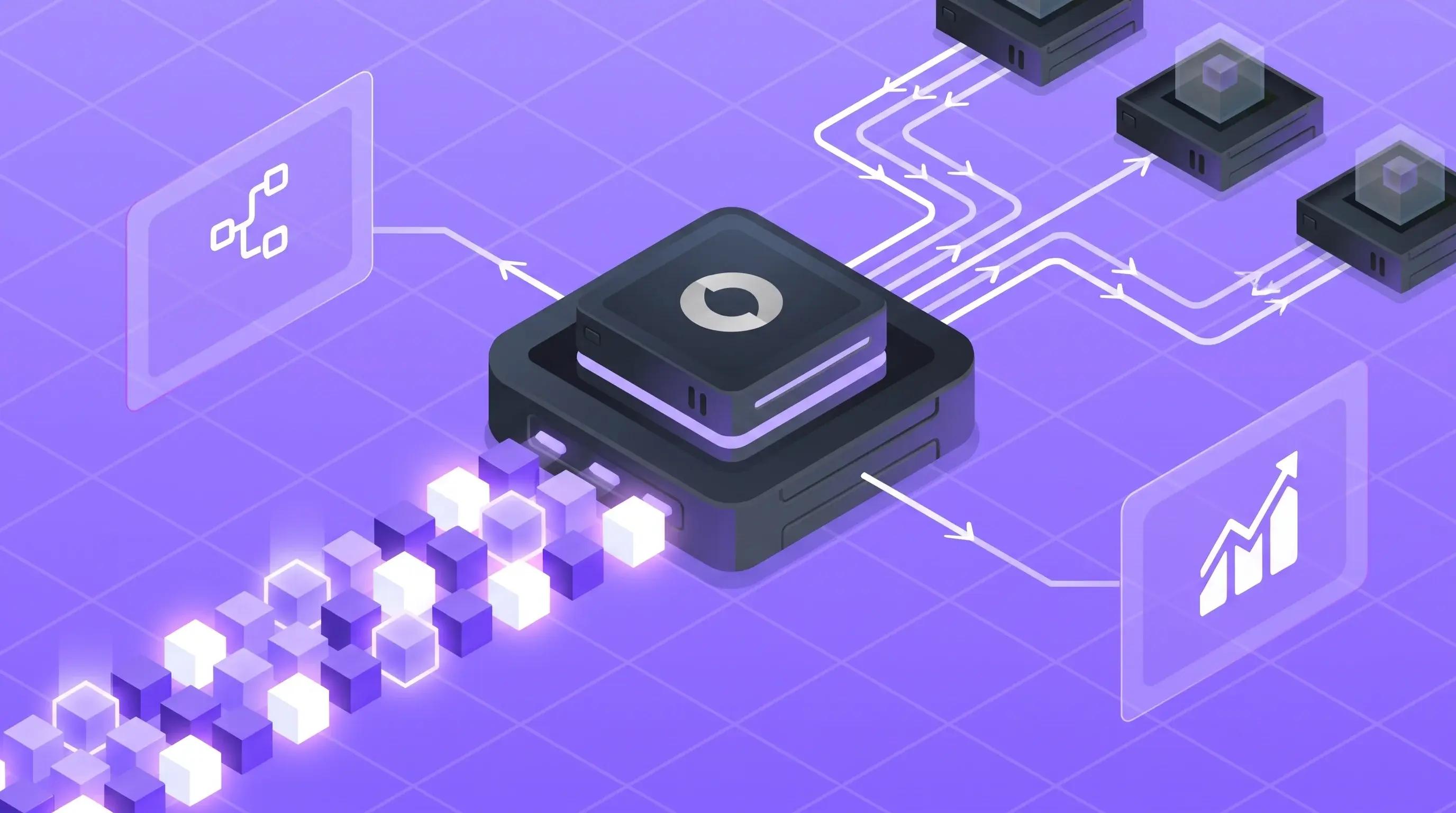
Juspay Hyperswitch gives the merchant direct control of the payment decision layer: which PSP or acquirer each payment goes to, what happens when it fails, and how fast traffic moves when a route degrades. Your checkout, wallet, user accounts and business rules stay exactly where they are.
Built for the busiest minutes of the year
Before the how, the proof. These are production numbers, not lab benchmarks:
| Sustained at peak, matchday-ready | Headroom the platform scales to | Transactions processed every day | Uptime |
| 20,000 TPS | 50,000 TPS | 300M+ | 99.999% |
That's more than enough to absorb a final, a ticket drop and a flash sale landing in the same hour, with room to spare. It is certified to PCI DSS v4, ISO 27001:2022 and SOC 2 Type II.¹
Here is what that changes on your biggest day.
1. Routing that reacts to live performance. Hyperswitch's intelligent routing picks a path per payment using live authorisation performance, alongside rules on BIN, issuer, currency, geography and amount. Volume-based splits spread load across several acquirers, so no single processor carries the whole surge.
2. Outage detection and automatic traffic shift. Health is monitored per PSP and payment-method pair. When a route starts timing out or declining, traffic moves to alternates automatically, and probe traffic confirms when the route has recovered. In one live PSP outage, a failing acquirer was detected and traffic shifted to alternates in minutes, recovering transactions before users noticed.
3. Retries and fallback on a different path. Soft declines and timeouts are retried on a secondary connector instead of the route that just failed. Idempotency and n-way reconciliation mean a lost callback doesn't become a double charge or a missing top-up.
4. Card rules enforced before the acquirer sees them. BIN-level rules let you apply per-market card restrictions centrally, so a compliance rule change is a configuration update, not a vendor ticket.
5. Tokens that work across every route. Cards are stored in a vault you own, and a card saved through one processor can be charged through another. Failover never asks a user to re-enter card details in the middle of a rush.
6. Payouts that hold up after the event. Payout routing with retries across rails such as ACH, RTP, SEPA, Visa Direct and Mastercard Send handles the refund and withdrawal surge. Closed-loop payouts, which return funds to the original payment method and are an AML requirement in many regulated markets, are supported.
Take only what you need, host it where your licence or regulator requires
Every capability is a separate module. A merchant worried only about peak resilience can start with routing, retries and outage alerts, and keep every PSP, fraud and reconciliation partner it already runs. Hyperswitch is open source and deploys three ways:
- Self-hosted in your own cloud or on-premise, in any jurisdiction, so customer data stays in-country where local rules require it.
- Self-hosted with outsourced PCI: you run the stack and Juspay carries the PCI scope.
- Juspay-hosted, fully managed as SaaS.
It also runs alongside your current setup. Merchants typically start by sending a share of traffic through Hyperswitch, compare approval rates and latency over a few big peaks, then migrate cards vault-to-vault with no card re-entry. Sandbox is typically live in two weeks and production in three.
Seven questions to ask any orchestration provider about peak
Whichever provider you're evaluating, these questions separate a platform that holds up under real peaks from a good demo.
- What is the highest TPS you have sustained in production for 30 minutes or more, and during which event?
- What were p99 latency and approval rate at that peak, compared with an ordinary hour?
- How quickly do you detect a degraded PSP or acquirer, and how quickly does traffic move off it? Is that automatic?
- Does routing respect each processor's rate limits, so load is spread before any one of them saturates?
- When a payment fails over to another route, can the stored card be charged there without the user re-entering details?
- Can you load-test at two to three times our busiest day before go-live, on our own traffic pattern?
- Does the SLA cover peak windows specifically, or only monthly uptime?
And two questions to ask yourself: what is your current chargeback ratio and scheme-monitoring status, and when does your current payment vendor contract come up for renewal? Both shape how fast you can move.
Make your next peak a non-event
Whatever you sell, users decide whether to stay at the payment screen. The best outcome on your biggest day is that nobody notices payments at all. That takes capacity with headroom, routing that adapts in seconds, and a decision layer you can see and control.
If your next big event, sale or launch is a few weeks out, a good first step is a traffic-split pilot: route a share of payments through Hyperswitch and compare approval rate and latency against your current setup during real peaks.