Every successful payment creates several versions of the truth.
Your order system records what the customer should pay. Your payment service provider records what it processed. Your bank records what reached your account. Fees, taxes, refunds, disputes and currency conversion create more records between those points.
Finance teams must prove that these records describe the same movement of money. A comparison that works for one provider and one market often fails when transaction volume and payment complexity increase.
An unexplained difference could be late data, a duplicate, an unexpected fee, a status conflict or a missing settlement. Treating every difference as the same problem creates noise and can hide revenue leakage.
Enterprise reconciliation must answer 5 questions:
- what should have happened
- what each payment provider reported
- what the bank settled
- why any records differ
- who resolved a difference, when and why
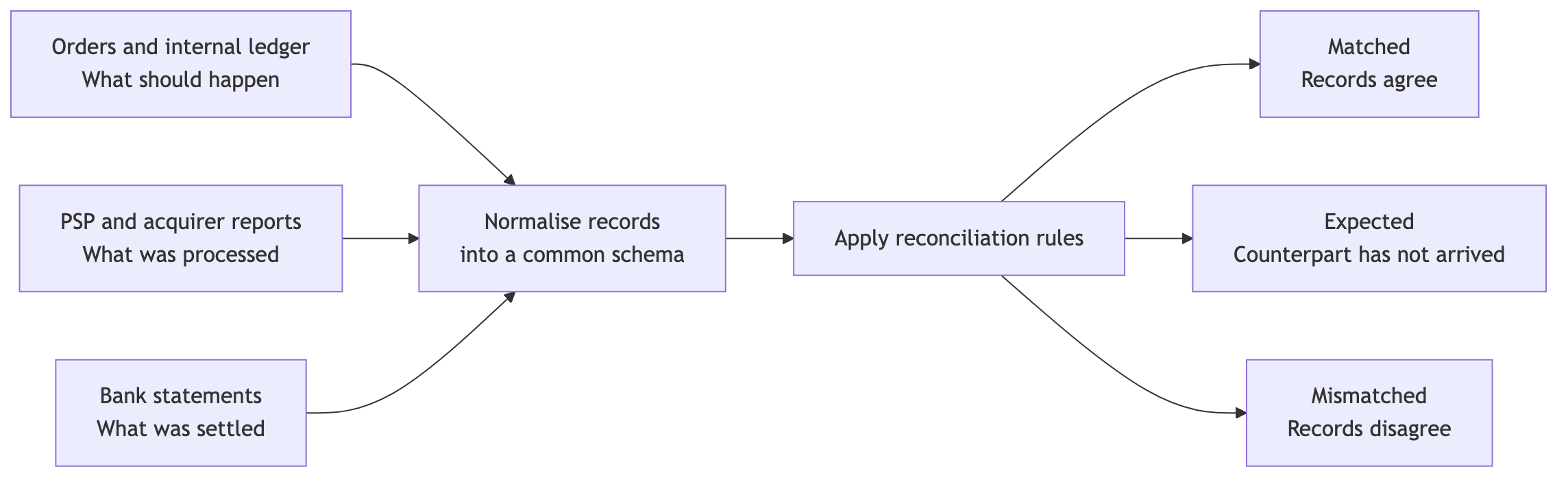
A useful reconciliation process preserves the meaning of each source while producing one easy to understand view of the result.
Data arrives in different shapes
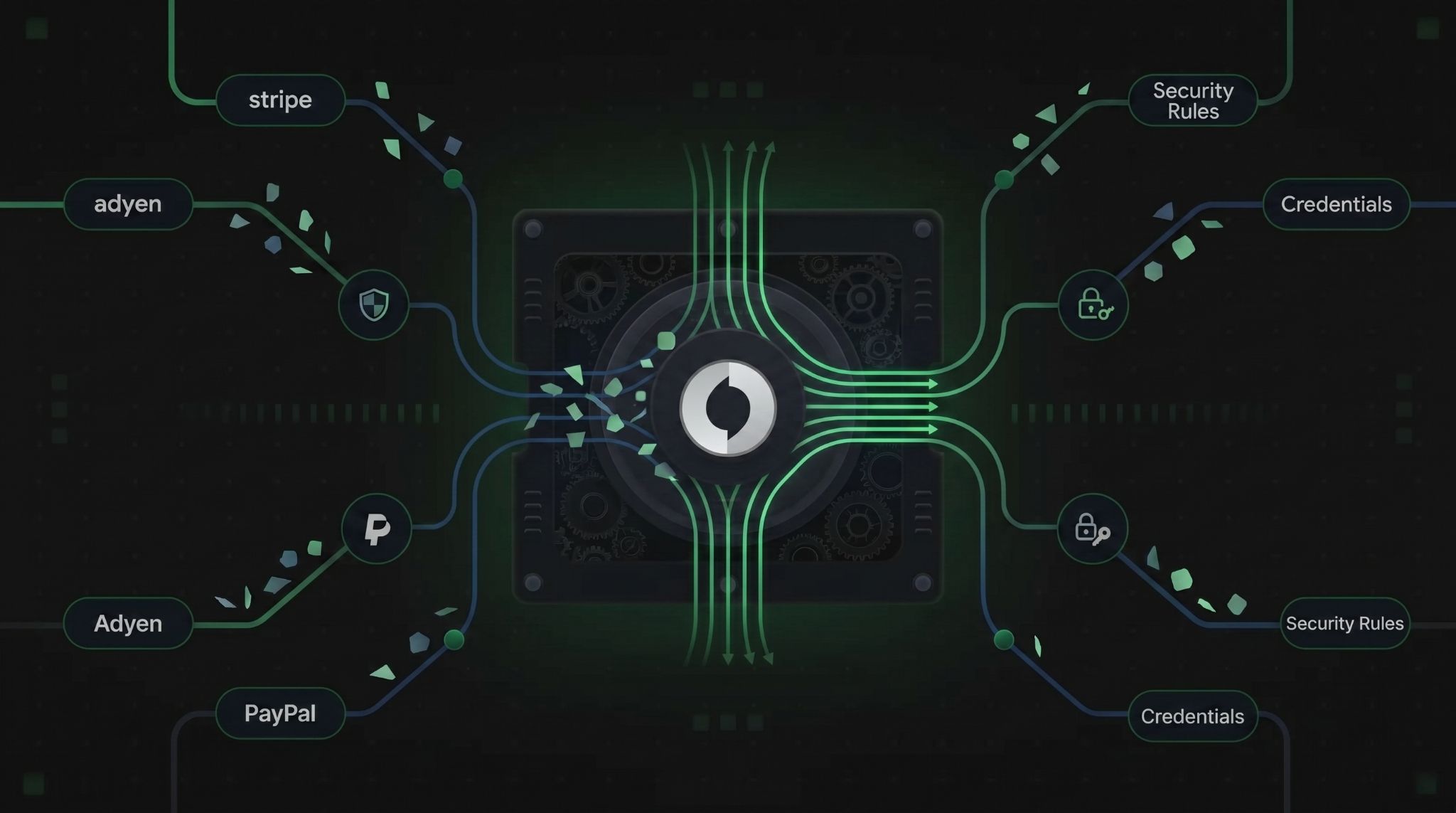
Payment data rarely arrives in one consistent format because of the variety of parties involved in payments. One provider may send a CSV report of a specific format, another may deliver a settlement file via a webhook. A bank may combine hundreds of payments into one deposit.
The field names also differ. order_id, merchant_reference and original_reference may identify the same business event. Amounts may use major or minor currency units. Dates may represent capture time, report time or settlement time.
Apart from combining files, the system must also standardize fields before it tries to match records.
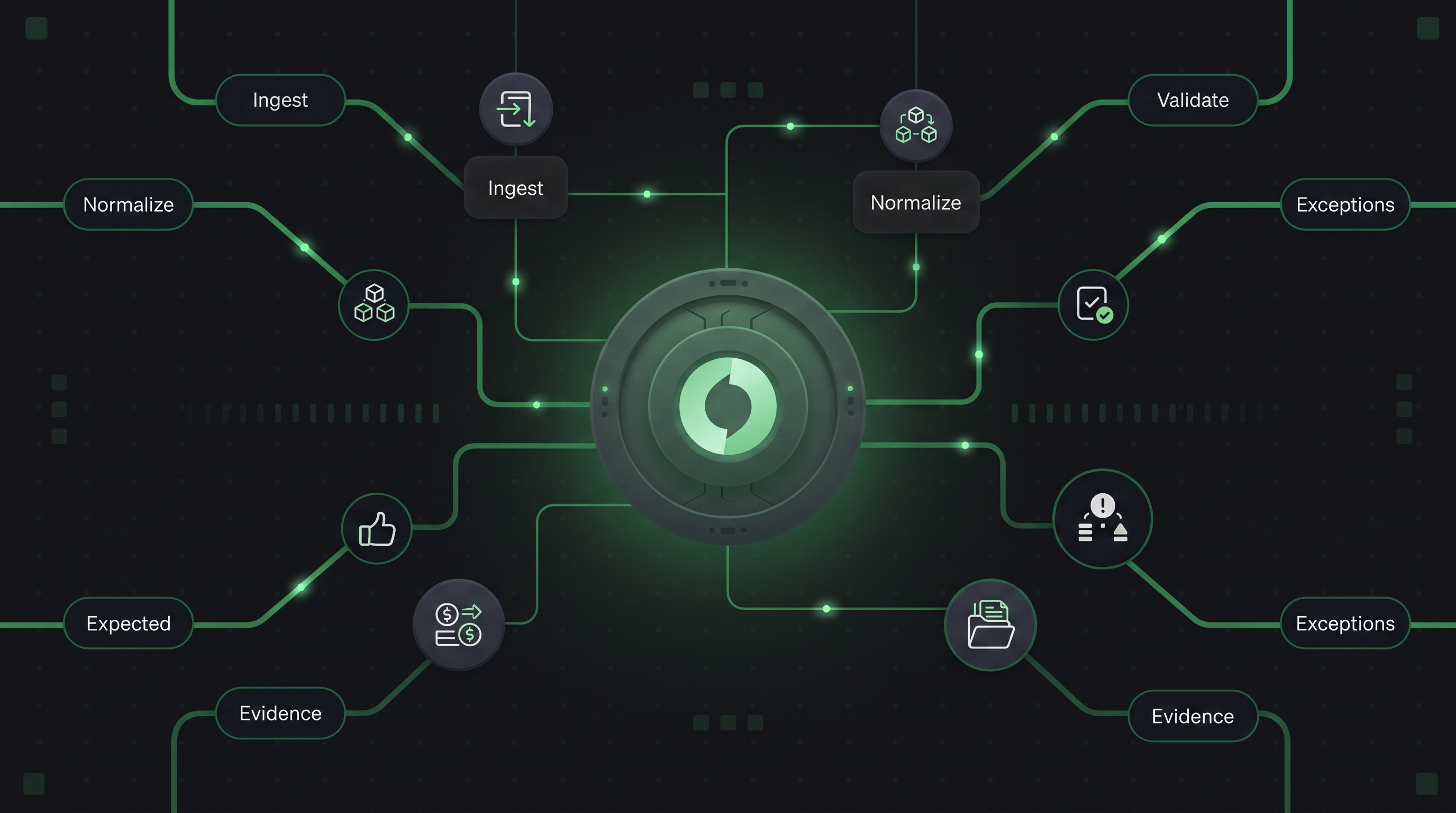
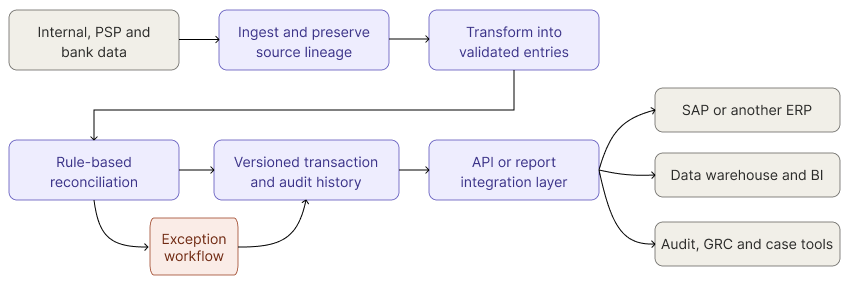
Hyperswitch Recon separates ingestion from transformation. Each source can be mapped to a metadata schema and converted into validated staging entries. The matching engine then works with a consistent model instead of provider-specific columns.
This separation makes provider changes easier to contain. A new report format should require a mapping change, not a rewrite of the reconciliation logic.
Arrival order is not business order
Payment systems run on different clocks. An order has an event time. A provider has a processing and cut-off time. A bank has a posting time. The files that report these events have their own arrival times.
The internal record often arrives first, followed by the provider report and bank statement. But the right-side record can arrive first. A provider file may reach the reconciliation system before an internal export. A bank credit may appear before the report that explains its breakdown.
A simple database join treats both cases as missing data. A reconciliation system should instead separate a temporary timing gap from a real contradiction.
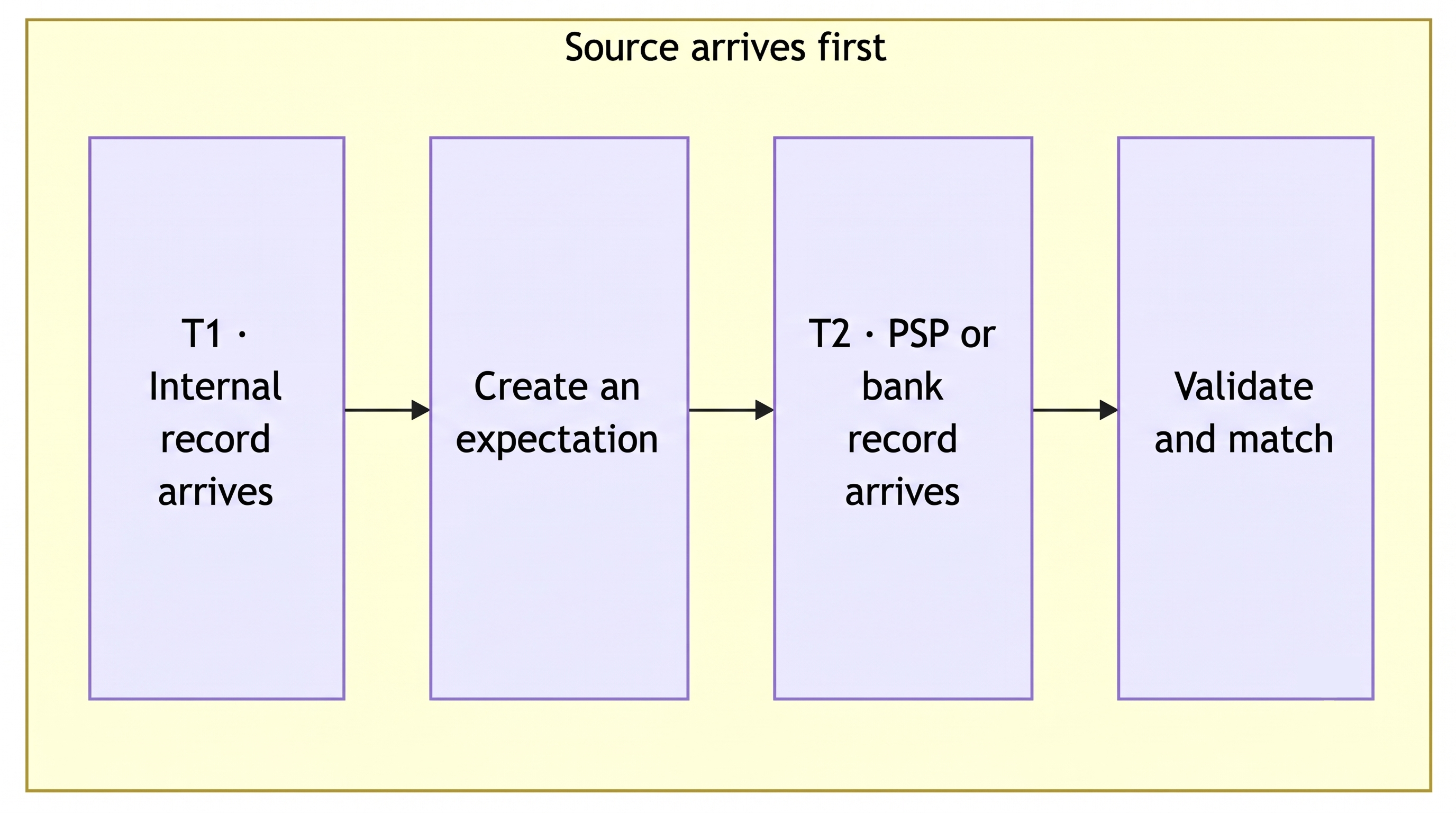
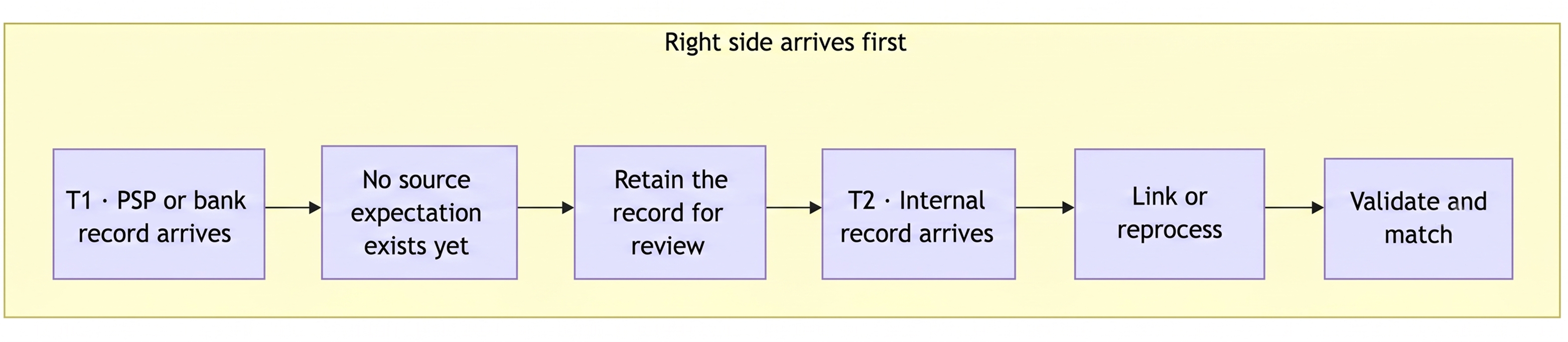
Hyperswitch models a known, not-yet-received counterpart as Expected. This keeps timing gaps separate from Mismatched transactions, where both records exist but their values disagree.
When a counterparty record arrives before an expectation exists, Hyperswitch retains it as a staging exception. An operator can later link it to the correct transaction instead of losing the record or forcing a false match.
This distinction reduces false alarms. It also gives finance teams a clearer view of aged expectations that may need action.
Money movement is not always one to one
Many reconciliation tools assume that one row on the left matches one row on the right. Real payment flows are more varied.
A customer payment can split into a net settlement, a provider fee and tax. Many captures can merge into one bank deposit. A marketplace payment can create payouts for several recipients. Refunds and partial settlements can change the shape again.
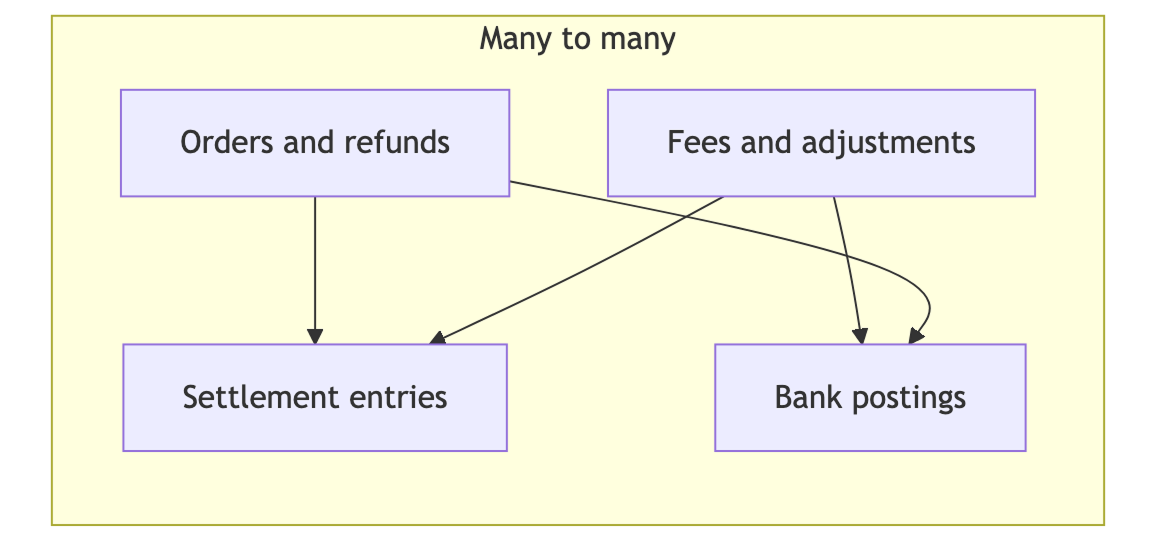
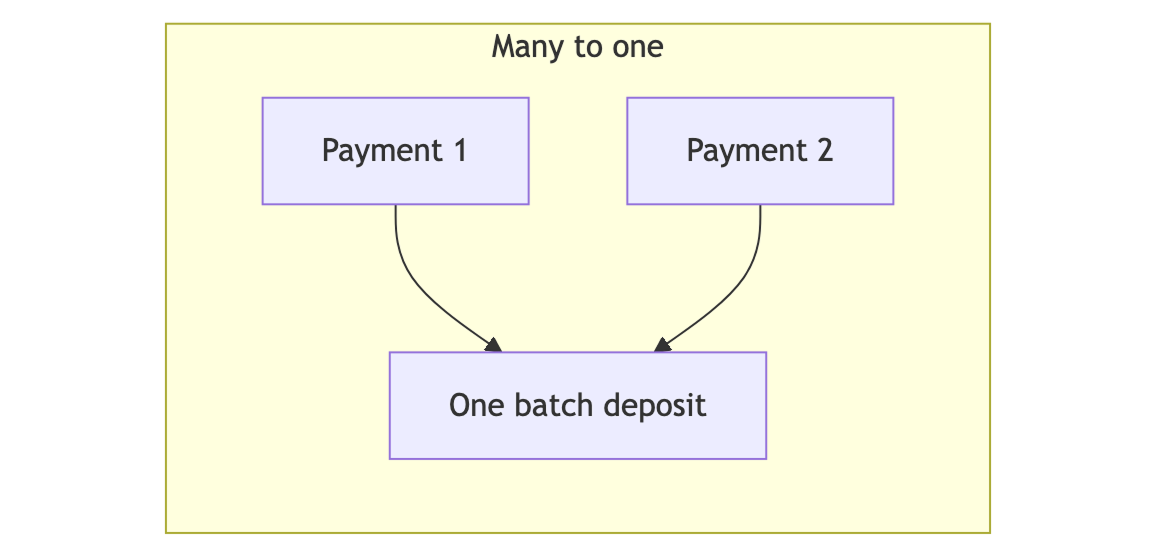
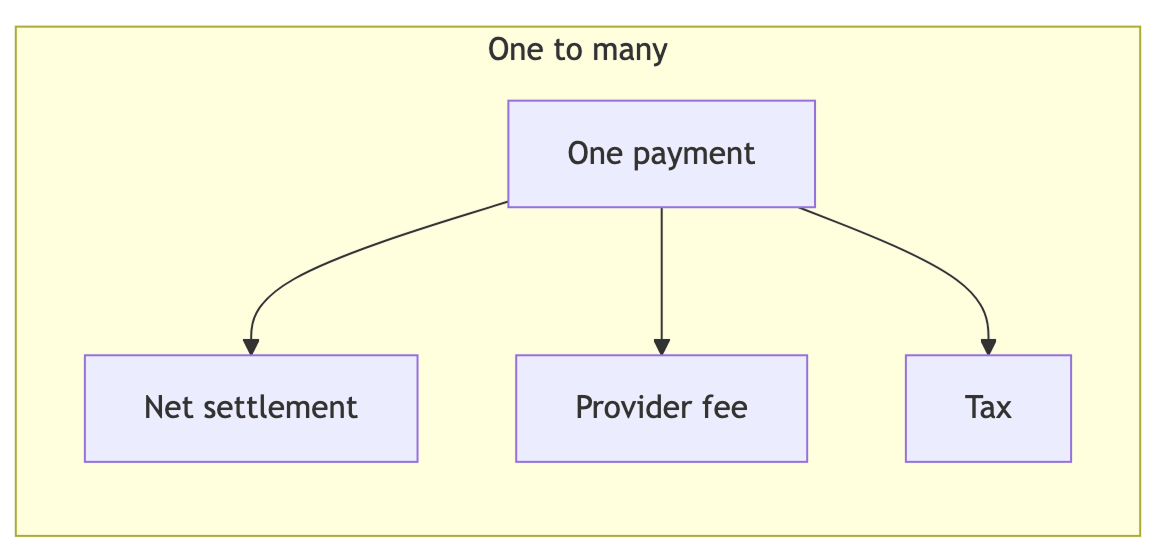
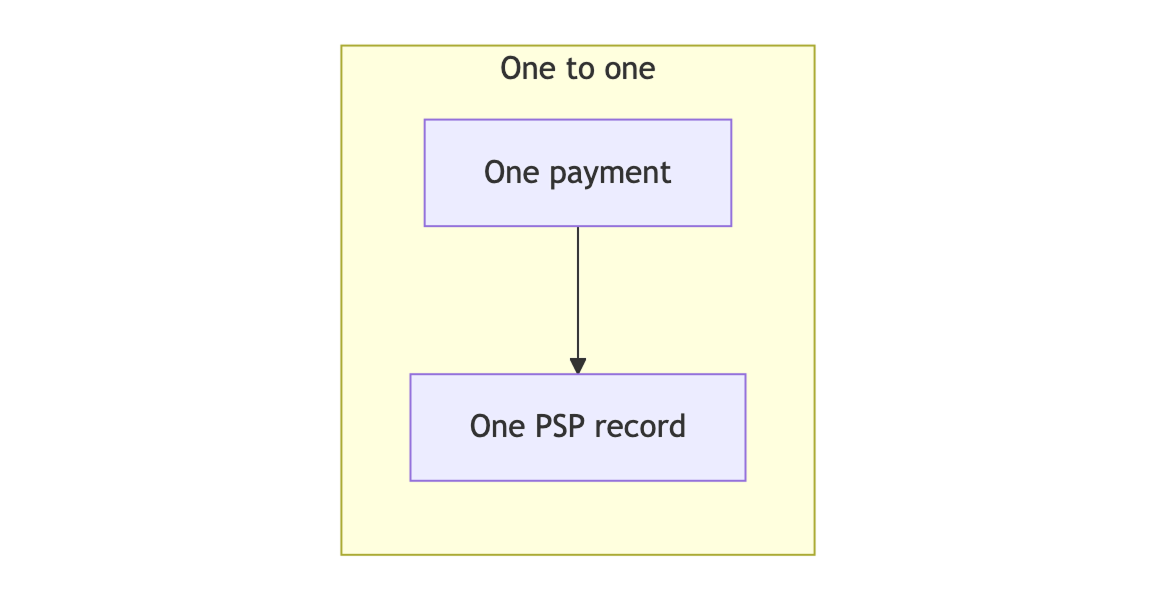
Hyperswitch supports configurable one-to-one, one-to-many, many-to-one and many-to-many strategies. Rules can use identifiers, grouping fields, amount logic and match conditions to represent the financial flow.
The engine can use these relationships for 2-way reconciliation between internal and provider data. It can also support 3-way flows that continue from provider records to bank settlement.
This matters because a correct match should reflect the commercial agreement. It should not depend on whether 2 files happen to have the same number of rows.
Exceptions need a controlled workflow
Automation does not remove every exception. It changes how teams find and resolve them.
Common exceptions include:
- no applicable rule for an incoming record
- no counterpart found yet
- more than one possible counterpart
- a missing identifier or grouping field
- amount, currency, status or metadata differences
- a duplicate record
If teams manage these cases in spreadsheets and email, the reconciliation system loses context. Work can be duplicated, decisions become hard to review and the same problem can recur without a rule change.
Hyperswitch Recon keeps exceptions beside the underlying staging entry or transaction. The available resolution depends on the state of the record. An operator can edit an entry, link records, create or replace entries, process a duplicate, force-reconcile an allowed difference or void an invalid record.
Manual action should not erase the automated result. Hyperswitch creates new versions as transactions evolve and records whether a change came from the system or a user. This preserves the path from the original exception to its resolution.
Audit evidence must leave the reconciliation tool
Reconciliation is not complete when a dashboard turns green. Finance, accounting, risk and audit teams often need the result in another system.
SAP or another ERP may need the final posting state. A data warehouse may need status and amount trends. An audit or governance tool may need evidence of the source file, rule decision and manual action.
The outbound record should include:
- source identifiers and account information
- event, arrival, effective and resolution times
- amount, currency, balance direction, fees and taxes where relevant
- the applied rule and reconciliation status
- the exception reason and resolution
- the user, timestamp and reason for a manual change
- lineage back to the ingested file and transformation run
Hyperswitch preserves lineage across ingestion, transformation, staging entries and versioned transactions. Its audit timeline shows file uploads, failed ingestion, created entries, expectations, matches and mismatches.
These structured records give teams a basis for downstream integrations. For example, an integration can send reconciled postings and their supporting evidence to SAP. The integration method can use an API or a deployment-specific report export. This does not require the ERP to recreate the matching logic.
A better reconciliation operating model
An enterprise reconciliation process should follow 5 principles.
Normalize before matching
Convert provider-specific data into a common model. Keep the raw source and transformation history for traceability.
Match the financial relationship
Support splits, aggregates and multi-account flows. Do not force every movement into a one-row-to-one-row comparison.
Treat time as part of the data
Store event time, effective time and arrival time separately. Allow either side to arrive first and measure how long expectations remain open.
Keep people inside the control framework
Give operators state-specific resolution actions. Record every edit, link, override and void with its reason and actor.
Export both results and evidence
Send downstream systems the final state and the history that supports it. A posting without lineage only moves the investigation elsewhere.
Build reconciliation around how money moves
Enterprise reconciliation becomes difficult when data sources, arrival times and financial relationships multiply. The answer is not a larger spreadsheet. It is a process that normalizes records, models expectations, supports complex matching and preserves every decision.
Hyperswitch Reconciliation brings internal, provider and bank data into one rule-based process. It helps finance teams explain what matched, what is still expected, what differs and what happened next.
Explore how the Hyperswitch reconciliation engine works or contact the Hyperswitch team to discuss your data sources and matching flows.