The gig economy alone generates $3.8 trillion in annual revenue across 435 million workers globally (DemandSage, 2026). Amazon's third-party sellers earned $156.1 billion in 2024. Insurance companies disbursed $965.6 billion in claims. YouTube has distributed $50 billion to creators since launch. Every one of these numbers represents a mass payout problem: how do you reliably move money to thousands or millions of recipients, across different countries, currencies, and payment methods, without drowning in operational complexity?
The global mass payouts market hit $14.2 billion in 2024 and is projected to reach $41.7 billion by 2033 at a 12.7% CAGR (DataIntelo, 2025). This growth is being driven by the explosion of gig platforms, marketplace economies, creator monetization, and embedded finance. Yet most businesses still struggle with the fundamentals: high failure rates, reconciliation headaches, compliance overhead, and recipient expectations for instant pay.
This article breaks down what mass payouts are, the payout methods available, what each costs, the industries that depend on them, the operational challenges that trip businesses up, and how Juspay Hyperswitch makes it possible to orchestrate payouts across 300+ processors and payment methods through a single integration.
What Are Mass Payouts?
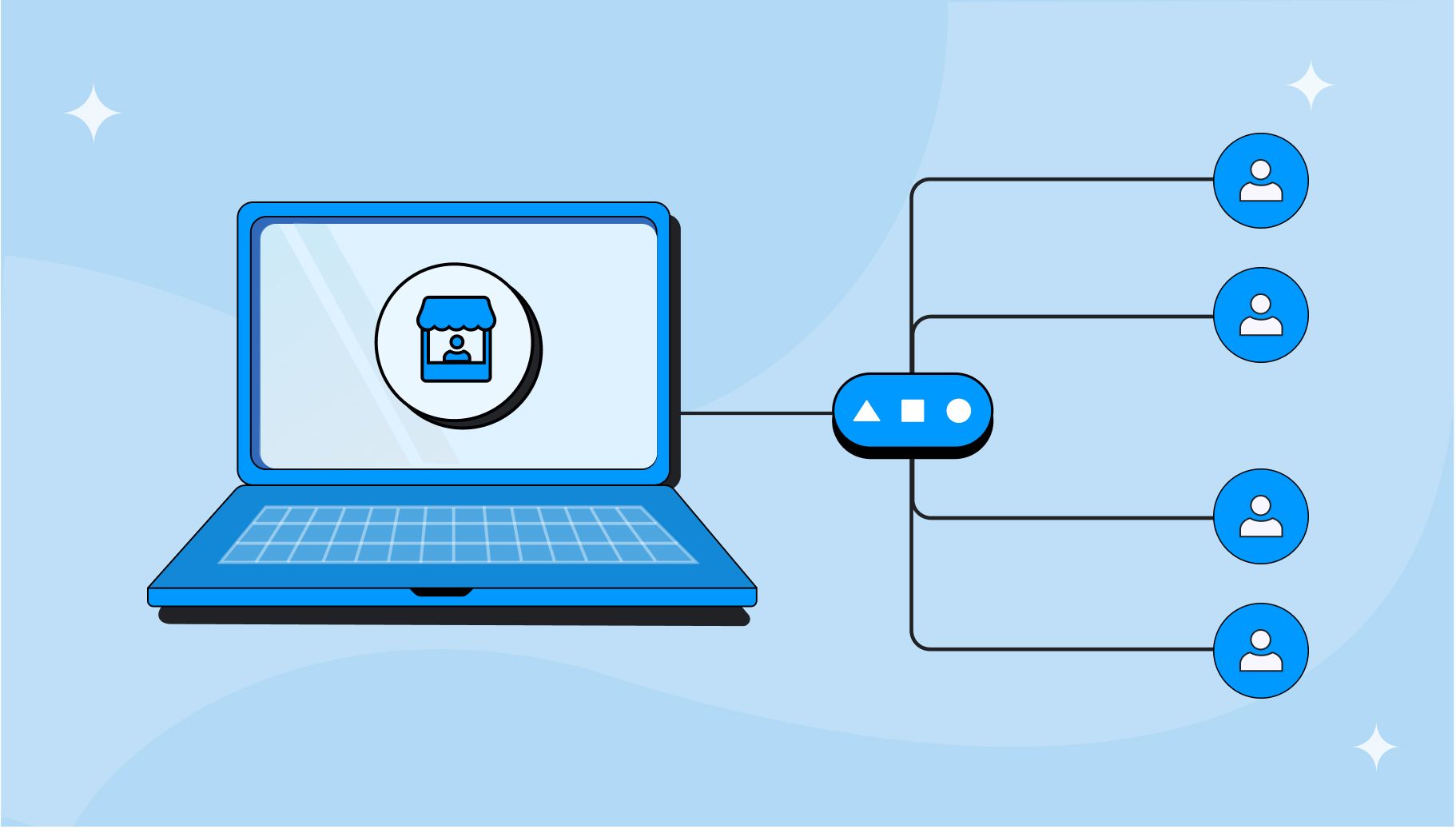
Mass payouts (also called bulk payouts or batch disbursements) are the simultaneous transfer of funds from a single source to multiple recipients. Instead of initiating payments one by one, a business submits a batch of payment instructions, and the system processes them in parallel.
The concept is simple. The execution is not.
A marketplace with 50,000 sellers across 30 countries needs to disburse weekly earnings in local currencies, via each seller's preferred method (bank transfer in Germany, mobile wallet in Kenya, push-to-card in the US), while handling tax withholding, compliance screening, and failed payment retries. That is a mass payout problem.
Who Uses Mass Payouts?
| Industry | Payout Type | Scale | Frequency |
| Gig platforms | Driver/courier earnings | Millions of recipients | Daily to weekly |
| Marketplaces | Seller disbursements | Tens of thousands to millions | Weekly to biweekly |
| Insurance | Claims settlements | Millions annually | Event-driven |
| Creator platforms | Creator/affiliate earnings | Hundreds of thousands | Monthly |
| Lending | Loan disbursements | Millions | On approval |
| Payroll | Employee salaries | Thousands to millions | Biweekly to monthly |
| Government | Benefits, tax refunds | Tens of millions | Monthly to annually |
Payout Methods: Cost, Speed, and Trade-offs
Not all payout methods are equal. The right choice depends on urgency, geography, transaction size, and recipient preference.
Method-by-Method Comparison
| Method | Cost Per Transaction | Speed | Availability | Best For |
| ACH | $0.20 to $0.50 | 1 to 3 business days | US only, business days | Recurring bulk payouts, payroll |
| Same-Day ACH | $0.50 to $1.50 | Same business day | US only, business days | Time-sensitive domestic payouts |
| Wire Transfer | $15 to $50+ | Minutes to same day | Global | Large, urgent transfers |
| Push-to-Card (Visa Direct) | Varies by provider | Under 30 minutes, often seconds | 1B+ eligible cards globally | Gig worker instant payouts |
| RTP Network | ~$0.045 | Seconds | 24/7/365, US | Instant disbursements |
| FedNow | ~$0.043 | Seconds | 24/7/365, US | Instant payouts (growing network) |
| Digital Wallets | Varies | Near-instant | Global | Consumer payouts, emerging markets |
| Paper Check | $7.78+ (up to $20+ fully loaded) | Days to weeks | US-centric | Legacy systems (declining) |
| Crypto | Varies | Minutes | Global | Cross-border, emerging markets |
The Economics at Scale
For a gig platform paying 100,000 workers weekly:
- ACH at $0.35 per transaction: $35,000/week, $1.82 million/year
- Wire at $25 per transaction: $2.5 million/week, $130 million/year
- Paper checks at $7.78 each: $778,000/week, $40.5 million/year
The difference between ACH and wire for the same operation is over $128 million annually. Payment method selection is not a detail. It is a strategic decision with massive financial implications.
The Rise of Real-Time Payouts
The biggest shift in mass payouts over the past five years is the demand for instant pay. Traditional batch-processed payouts that settle in one to three days are no longer meeting recipient expectations.
The Numbers Tell the Story
- 81% of gig workers would prioritize a platform offering instant payments (PYMNTS, 2025)
- 85% of gig workers are willing to work more if paid faster
- 77% of consumers receiving payouts opt for instant delivery when it is available
- 59% of gig-related disbursements are already sent instantly where the option exists
- Yet only 36% of gig platforms offer instant payments always or most of the time
This gap between demand and availability is a competitive vulnerability. Platforms that offer instant payouts attract and retain more workers. Those that do not lose talent to competitors that do.
Real-Time Payment Rails in the US
Visa Direct processed 11 billion transactions total, growing 41% year-over-year in Q3 2024 alone, reaching 2.6 billion transactions in that quarter. It reaches 1+ billion eligible Visa card accounts globally.
RTP Network (operated by The Clearing House) processed 343 million transactions worth $246 billion in 2024, a 94% jump in value from the prior year. The average payment value rose from $514 to $719 (Finzly, 2025).
FedNow launched in July 2023 with 35 institutions and grew to over 1,200 institutions by January 2025, a 3,300% increase. It processed $245 billion in Q2 2025, up from $492 million in Q2 2024, a 49,000% year-over-year increase.
The global real-time payments market is valued at $24.91 billion in 2024 and projected to reach $284.49 billion by 2032 at a 35.4% CAGR.
The Gig Economy: Where Mass Payouts Meet Scale
The gig economy is the largest and most demanding consumer of mass payout infrastructure.
Scale of the Problem
- 435 million gig workers globally, with 76.4 million freelancers in the US alone (DemandSage, 2026)
- The gig economy market is projected to reach $674.1 billion in 2026 at 15.79% CAGR
- Gig economy payouts estimated to hit $1 trillion by 2028
- Uber alone had 7.8 to 8.8 million drivers and couriers globally, with driver/courier earnings reaching $20 billion (including tips) in Q4 2024, up 16% year-over-year
- Uber and Lyft combined generated nearly $50 billion in revenue and facilitated 12+ billion trips in 2024
Why Gig Payouts Are Hard
Gig workers are not employees. They are independent contractors spread across geographies, each with different banking access, different preferred payout methods, and different tax jurisdictions. A US-based ride-share driver wants instant push-to-card. A creator in Nigeria needs mobile money. A freelance developer in Germany expects SEPA transfer.
The platform must handle:
- Multi-method payouts: ACH, push-to-card, wallet, bank transfer, depending on the recipient
- Multi-currency: Earnings in USD, payouts in local currency
- Tax compliance: 1099 reporting in the US (10-form threshold triggers mandatory e-filing), VAT in Europe, local requirements everywhere else
- Instant availability: 54% of gig workers need same-day fund access
- Fraud prevention: Verify recipient identity without creating friction that drives abandonment
Cross-Border Payouts: The Complexity Multiplier
When mass payouts cross borders, every operational challenge gets harder.
The Market
Cross-border payment flows exceed $150 trillion annually, expected to reach $250+ trillion by 2027. The B2B cross-border segment alone is $39 trillion, expected to hit $56 trillion by 2030 (Grand View Research).
Global remittances reached $905 billion in 2024, up 4.6% from $865 billion in 2023 (World Bank, 2025).
The Cost Problem
The average cost of sending remittances globally is 6.49%. Digital channels bring this down to 4.85%, but non-digital channels average 7.16% (World Bank Remittance Prices Worldwide, Q1 2025). Sub-Saharan Africa is the most expensive corridor at roughly 9% average.
The G20 set a target of reducing remittance costs to 3% by 2030. A more aspirational target of 1% by 2027 exists but remains far from reality. Currently, 76% of corridors meet the intermediate target of below 5%.
For a marketplace paying 10,000 sellers in 30 countries, cross-border payout costs can eat 3% to 7% of every disbursement. On $100 million in annual seller payouts, that is $3 million to $7 million in fees alone.
What Makes Cross-Border Payouts Difficult
- Currency conversion: FX markups add 1% to 3% on top of transaction fees
- Correspondent banking: Multiple intermediary banks, each taking a cut
- Regulatory variance: Different KYC/AML requirements in every jurisdiction
- Settlement times: International wires can take 2 to 5 business days
- Sanctions screening: OFAC compliance required for all cross-border transactions, with $48.8 million in OFAC penalties issued in 2024 across 12 enforcement actions
Industry Deep Dives: Where Mass Payouts Drive Business Outcomes
Insurance Claim Disbursements
Total insurance disbursements reached $965.6 billion in 2024, a 16% year-over-year increase from $831.8 billion. Property claims rose 36%, and catastrophe claims surged 113% year-over-year. Global insured catastrophe losses hit $140 billion in 2024, the third most expensive year since 1980.
Speed matters enormously in claims. When a family loses their home to a hurricane, waiting two weeks for a paper check is not just inconvenient, it is a failure of service. Instant payout use in insurance tripled from 11% in 2018 to 37% in early 2025. And 97% of recipients receiving frequent or high-dollar disbursements prefer instant delivery.
Digital channels reduce average payment time by up to 5.5 days over traditional checks, while achieving 98% successful delivery versus 55% to 77% for paper checks.
Creator and Affiliate Payouts
The creator economy is valued at $104 billion in 2024, projected to reach $528.39 billion by 2030 at 22.5% CAGR. Affiliate marketing generates $17 billion globally, expected to reach $27.78 billion by 2027.
Creators and affiliates are particularly sensitive to payout timing and method. Many are small earners who depend on disbursements for monthly expenses. SaaS affiliate commissions range from 20% to 70% of sales value, and delays or failures directly impact creator loyalty to the platform.
Lending Disbursements
The digital lending market reached $507.27 billion in 2025, projected to hit $985.03 billion by 2031 at 11.68% CAGR. In India alone, $17.53 billion was disbursed in digital loans in FY24, a 49% year-over-year surge across 100 million loans.
Instant disbursement is a competitive differentiator in lending. Over 90% of digital loan applications now route through automated underwriting, with 80% receiving instant approvals. Borrowers expect the funds to arrive just as fast as the approval.
Marketplace Seller Payouts
Amazon third-party sellers generated $156.1 billion in revenue in 2024, representing 61% of all paid units on the platform. The average Amazon seller earns $140,000+ annually. Multi-marketplace sellers are common: 24% sell on both Amazon and eBay, 16% sell on Amazon and Shopify, and 15% sell on Amazon and Walmart.
For marketplaces, payout reliability is a seller retention lever. Sellers will migrate to platforms that pay faster, more reliably, and in their preferred method.
The Operational Pain Points of Mass Payouts
1. Failed Payments
The average transaction failure rate across industries is 7.9%, reaching up to 14.7% in certain sectors. Up to 12% of card-on-file transactions fail due to expirations, insufficient funds, or network glitches. Failed cross-border payments alone cost US merchants an estimated $3.8 billion in 2024.
A single payment failure can drive 35% of users to cancel. For subscription businesses, failed transactions are projected to cost $129 billion in lost revenue in 2025. Involuntary churn (caused by payment failures, not customer decisions) accounts for up to 40% of total churn and costs businesses an average of 9% of annual revenue.
Basic retry logic recovers only 15% to 25% of failed payments. AI-powered recovery systems can recapture up to 70%.
2. Reconciliation Complexity
When you are paying thousands of recipients across multiple methods, currencies, and processors, reconciliation becomes a major operational burden. Manual invoice processing costs $15 to $17 per invoice; automation drops this to under $3. Yet 98% of companies still have some manual payment processing.
Administrative costs average 15% of total settlement funds (ranging from 5% to 30% depending on complexity). Automation improves reconciliation efficiency by 60% to 80%, saving finance teams 500+ hours annually.
3. Compliance and Regulatory Burden
Financial crime compliance costs $206.1 billion globally, with US and Canada alone spending $61 billion annually. Total bank fines for compliance violations reached $4.5 billion in 2024. The cost of maintaining compliance averages $5.47 million annually per organization, but the average cost of violations is $14.82 million, making compliance the economically rational choice by a wide margin.
Specific compliance challenges for mass payouts include:
- KYC/AML screening: 50% to 70% customer abandonment during KYC onboarding. AML alert systems have a 90% to 95% false positive rate, generating 950 false alerts daily per million transactions at large institutions, each requiring ~30 minutes to investigate.
- Tax reporting: In the US, the 10-form threshold triggers mandatory e-filing for 1099s. Penalties range from $60 to $330 per late form. 74% of gig workers cannot identify the correct IRS reporting thresholds.
- Sanctions screening: $48.8 million in OFAC penalties in 2024. 50% of cases involved Iran sanctions violations.
- Multi-state licensing: Nationwide licensing compliance in the US requires $500,000 to $1 million across 10,960 active MSB licenses in 47 states.
4. Fraud
Payment fraud affects 79% of organizations. US fraud losses reached $47 billion in 2024, a 19% year-over-year increase. The fraud recovery rate dropped to just 22% in 2024, down from 41% in 2023. 70% of fraud occurs after initial KYC completion, meaning onboarding checks alone are not sufficient.
For mass payouts specifically, the risks include fraudulent recipient accounts, account takeover to redirect disbursements, and business email compromise targeting finance teams. 38% of organizations experienced ACH debit fraud in 2024, and 50% of BEC-targeted payments used ACH credits.
Building a Mass Payout Strategy: What to Get Right
1. Support Multiple Payout Methods
No single method works for every recipient. A US gig worker wants instant push-to-card. A German seller expects SEPA. A Nigerian creator needs mobile money. Your payout infrastructure must support the methods your recipients actually use.
2. Prioritize Real-Time Where It Matters
Not every payout needs to be instant. Payroll can settle in one to two days via ACH. But insurance claims, gig worker earnings, and lending disbursements increasingly demand real-time settlement. Route based on use case and recipient preference.
3. Automate Reconciliation
At scale, manual reconciliation is unsustainable. Automate matching of outgoing payout instructions against settlement confirmations, returns, and failures. Build dashboards that surface exceptions rather than requiring manual review of every transaction.
4. Build Compliance Into the Workflow
Do not bolt compliance on as an afterthought. KYC verification, sanctions screening, and tax reporting should be embedded into the payout flow. Automate 1099 generation. Screen recipients against sanctions lists in real time. Track state-by-state licensing requirements.
5. Plan for Failures
Assume 5% to 10% of payouts will fail on the first attempt. Build automated retry logic with intelligent timing. Offer recipients the ability to update payment details through self-service portals. Monitor return codes and failure reasons to identify systemic issues.
How Juspay Hyperswitch Powers Mass Payouts
Juspay Hyperswitch is an open-source payment orchestration platform that connects to 300+ processors and payment methods through a single API. For mass payouts, it provides a dedicated payout orchestration layer with smart routing, automatic retries, bulk operations, and shareable payout links, all processor-agnostic.
Supported Payout Connectors and Methods
Juspay Hyperswitch integrates with major payout processors, each covering specific regions and payout methods:
| Connector | Bank Transfer | Card Payout | Wallet Payout | Key Regions |
| Adyen | Yes | Yes | Yes | Global (60+ countries) |
| Stripe | Yes | Yes | No | US, EU, UK, APAC |
| Wise | Yes | No | No | 80+ countries, 50+ currencies |
| PayPal | No | No | Yes (PayPal wallet) | Global |
| Ebanx | Yes | No | No | Latin America (Brazil, Mexico, Colombia, Chile, Argentina) |
| Cybersource | No | Yes | No | Global |
Through this connector matrix, a single Juspay Hyperswitch integration gives businesses access to bank transfers, push-to-card payouts, and wallet disbursements across every major region. Adding a new payout method or geography requires enabling a connector in the dashboard, not writing new integration code.
Smart Payout Routing
Juspay Hyperswitch applies the same smart routing engine used for payments to payout transactions. The router selects the optimal connector for each payout based on configurable strategies:
- Volume-based routing: Distribute payout volume across connectors by percentage (e.g., 60% through Wise, 40% through Adyen) for cost optimization and risk distribution
- Rule-based routing: Define conditional routing rules based on payout amount, currency, recipient country, or payout method. For example, route all EUR bank transfers under $10,000 through Wise and all card payouts through Cybersource
- Default fallback: Set a primary connector with automatic fallback to a secondary connector if the primary fails or is unavailable
This routing layer eliminates the manual connector selection that typically burdens finance and engineering teams at scale.
Smart Retries for Failed Payouts
Payout failures are inevitable at scale. Juspay Hyperswitch provides two retry strategies to maximize delivery rates:
Single-connector retries: When a payout fails due to a transient error (timeout, rate limit, temporary downtime), Juspay Hyperswitch retries the same connector up to 5 times by default. The retry count is configurable per connector.
Multi-connector retries: When a payout fails due to a connector-specific issue (declined, unsupported method, compliance block), Juspay Hyperswitch automatically routes the payout to the next eligible connector in the routing configuration. If Wise rejects a bank transfer due to a currency restriction, the system retries through Adyen without any manual intervention.
Both strategies run automatically. The merchant receives a webhook only when the payout succeeds or all retry paths are exhausted.
Payout Links
For recipients who have not provided banking details (insurance claimants, contest winners, ad-hoc payouts), Juspay Hyperswitch generates shareable payout links. The sender creates a payout link via API, specifying the amount and expiration. The recipient clicks the link, selects their preferred payout method (bank account, card, or wallet), enters their details, and receives the funds.
Key capabilities of payout links:
- Custom branding: Merchants customize the payout link page with their logo, colors, and domain
- Multi-method collection: Recipients choose their preferred payout method at the time of collection
- Expiration controls: Links expire after a configurable period
- Status tracking: Real-time status updates via webhooks (link sent, opened, details submitted, payout completed)
This eliminates the operational overhead of collecting and validating recipient banking details before disbursement.
Bulk Payout Operations
For high-volume batch payouts (payroll, seller disbursements, affiliate commissions), Juspay Hyperswitch supports bulk payout creation via CSV and XLSX file upload through the dashboard. The merchant uploads a file containing recipient details, amounts, and payout methods. Juspay Hyperswitch validates the file, creates individual payout objects, and processes them through the smart routing engine.
This handles the "50,000 sellers paid weekly" use case without requiring individual API calls for each recipient.
Processor-Agnostic Tokenization
Juspay Hyperswitch tokenizes sensitive recipient data (bank account numbers, card numbers) in its PCI DSS 4.0 certified card vault with multi-layered encryption. Tokens are processor-agnostic, meaning a recipient's tokenized bank details can be used across any connected processor without re-collecting information. If a business switches from Stripe to Wise for bank transfers, the existing recipient tokens work seamlessly.
Account Verification
Before processing payouts, Juspay Hyperswitch supports recipient account verification to reduce failure rates. For bank transfers, this includes micro-deposit verification (sending two small amounts that the recipient confirms) and instant bank verification through supported connectors. Verifying accounts upfront prevents the 5% to 10% first-attempt failure rate that plagues unverified payout batches.
Real-Time Visibility and Reconciliation
Every payout, from creation through settlement, is tracked in a unified dashboard with real-time status updates. Webhooks fire at each state transition (created, submitted, confirmed, failed, reversed). Consolidated reporting across all connectors and payout methods eliminates the reconciliation burden of managing separate dashboards per processor.
Key Takeaways
Mass payouts are not a back-office function. They are a strategic capability that directly impacts worker retention, seller loyalty, customer satisfaction, and operational costs. The businesses that get payouts right, fast, reliable, multi-method, and compliant, build a durable competitive advantage.
The market is moving toward real-time, multi-rail, and API-first payout infrastructure. With gig economy payouts projected to reach $1 trillion by 2028 and the real-time payments market growing at 35.4% CAGR, the businesses investing in payout orchestration now will be positioned to scale. Those relying on manual processes and single-method payouts will fall behind.
Juspay Hyperswitch provides the infrastructure to orchestrate mass payouts across 300+ processors and payment methods through a single API, with smart routing, automatic failover, multi-currency support, and real-time visibility. One integration. Every payout method. Every market.