
US merchants paid a record $198.25 billion in card swipe fees in 2025, more than double what they paid a decade ago (Merchants Payments Coalition, 2025). That figure has increased 80% since the pandemic alone. The November 2025 Visa/Mastercard settlement offered a 10 basis point reduction on credit cards for five years. The National Retail Federation called it "all window dressing and no substance." The Credit Card Competition Act, reintroduced in January 2026 with bipartisan backing and a presidential endorsement, has stalled in Congress.
Meanwhile, Walmart launched pay-by-bank over real-time rails in 2025, routing transactions through FedNow and The Clearing House's RTP network to bypass interchange entirely. Fiserv's head of digital payments said pay-by-bank has become "part of the conversation with every enterprise client we have," with every merchant asking the same thing: how do I lower my cost of payment acceptance?
Real-time payment rails are the structural answer to that question. Not the only answer, and not one that works for every checkout context today. But the merchants in markets where these rails have already won, India, Brazil, and Europe, have already shown what the end state looks like: zero-to-near-zero acceptance cost, instant settlement, and higher authorization rates. The infrastructure for that same outcome now exists in the US.
The fee problem has no legislative fix in sight
The numbers are not marginal. Swipe fees are the second-highest operating cost for most US retailers, behind only labor. For a restaurant, card processing is the third-largest cost after food and labor. Visa and Mastercard credit card fees alone hit $118.8 billion in 2025, up from $111.2 billion the prior year (Merchants Payments Coalition, 2025).
Three attempts to settle the 20-year antitrust litigation against Visa and Mastercard have each been rejected or condemned as inadequate by major retail groups. The proposed 0.10% reduction applies only to standard consumer cards, not to the premium rewards cards that make up roughly 85% of credit cards issued today. It caps rates on a narrow subset of transactions while leaving Visa and Mastercard free to raise their own network assessment fees.
The Credit Card Competition Act would force large banks to support at least two competing networks on each credit card, giving merchants routing choice. It has bipartisan sponsors and White House support as of January 2026, but has been blocked from advancing as a standalone bill or as an amendment to broader legislation (Kilpatrick Townsend, January 2026). The direction of travel is not toward meaningful regulatory relief on a near-term timeline.
That is the context in which pay-by-bank over real-time rails is gaining ground in US merchant conversations.
What Walmart's move signals
Walmart began offering pay-by-bank to online shoppers in early 2024, initially running over ACH. In September 2024, Walmart and Fiserv completed a proof-of-concept transaction over Fiserv's NOW Network, which connects to both RTP and FedNow. The upgrade to real-time rails went live in 2025, meaning customers see the purchase appear in their bank account instantly and Walmart receives the funds the same way.
The merchant incentive is straightforward: bypassing card networks eliminates interchange on those transactions. The Federal Reserve's own research puts merchant savings from pay-by-bank at 40% to 85% vs credit cards, depending on the provider and implementation (Federal Reserve Board, July 2025). Walmart processes at a scale where even modest shifts in payment method mix translate to hundreds of millions of dollars annually.
Fiserv's NOW Network is designed to route transactions across both RTP and FedNow, the two US real-time rails, based on which institutions are reachable on each. As of April 2026, FedNow covers over 1,700 participating financial institutions across all 50 states and RTP covers just under 1,200. Between them, a meaningful share of US consumer bank accounts are now reachable for instant push payments.
This is what real-time rail adoption in the US actually looks like: not a direct-to-consumer checkout moment, but a large merchant quietly rewiring payment routing to reduce its cost per transaction.
The markets where this is already the default
The US trajectory has a clear reference point. In two of the fastest-growing e-commerce markets, real-time rails did not supplement cards. They replaced them.
India. UPI processed 22.64 billion transactions in March 2026, growing 24% year-on-year, with a transaction value of approximately $350 billion for the month (NPCI, April 2026). For Indian e-commerce, UPI is the default checkout option. Merchants without UPI integration are offering an incomplete checkout to the majority of Indian shoppers. The merchant cost is zero: UPI carries no interchange equivalent for most transaction categories. Compare that to the 1.5% to 2.5% a US merchant pays for a domestic Visa or Mastercard transaction.
Brazil. Pix processed 64 billion transactions in 2024, a 53% year-on-year increase, and that volume ran 80% higher than the combined total of all credit and debit card transactions in Brazil that year (Matera / Banco Central do Brasil, January 2025). By early 2025, Pix was handling over 224 million transactions in a single day (Banco Central do Brasil, March 2026). Zero interchange. Instant settlement. Higher authorization rates than cards for domestic consumers. Pix Automatico, launched in June 2025, added recurring payment support, closing the last gap where cards had an advantage.
These are not emerging markets adopting real-time payments as a workaround for limited card infrastructure. Brazil has a sophisticated card market. India had one too. Both countries saw real-time rails win on economics alone.
The US is not India or Brazil. FedNow does not have a government mandate requiring bank participation, and consumer checkout behavior defaults to cards and digital wallets in ways that will not shift overnight. But the economics are identical: zero-to-near-zero acceptance cost for real-time rails versus 1.5% to 3%+ for cards. The only variable is when enough of the checkout infrastructure reaches consumers in a way that makes the switch frictionless.
The three things real-time rails do better than cards for US merchants today
Cost. The comparison is not complicated. FedNow charges $0.045 per transfer, with the first 2,500 monthly transactions currently waived. RTP charges a flat per-transfer fee. Neither charges interchange. Neither charges a percentage of transaction value. For a merchant processing $1 million monthly in card transactions at a 2% blended rate, the card cost is $20,000 per month. The same volume over real-time rails costs a few hundred dollars. The constraint is not economics. It is consumer adoption of the checkout flow.
Settlement. Card settlement arrives T+1 to T+2. Real-time rails settle in seconds, 24/7/365. For merchants managing working capital, that is not a convenience feature. It is the difference between cash in account tonight and cash in account tomorrow afternoon. For high-volume merchants, the float on a day or two of transaction value is meaningful. For merchants in thin-margin categories (grocery, restaurant, fuel), it can determine whether they are drawing on a credit line to cover daily operations.
Chargebacks. Real-time rails do not have card network chargeback infrastructure. Refunds are processed as a new transfer in the opposite direction. For merchants with high dispute rates, particularly in categories where fraud chargebacks are common, this is a material cost saving. Card chargeback fees, chargeback management software, and dispute labor costs are real line items. They do not exist on real-time rails.
Where FedNow is gaining ground in 2026
Consumer e-commerce is not where FedNow is moving fastest. The use cases that have taken hold are where the economics are clearest, and the consumer friction of switching is lowest.
B2B payments. Business-to-business transactions previously moving via ACH (1 to 2 day settlement, $0.20 to $1.00 per transaction) or corporate card (1.5% to 2.5% interchange) now have a FedNow pathway with instant settlement and near-zero fees. FedNow's average transaction value in Q1 2026 was approximately $99,000, indicating that high-value commercial transactions are already the primary use case (FX-C Intelligence, April 2026). FedNow transaction volume grew 645% year-on-year through 2025, and total payments value grew 2,134% over the same period (FX-C Intelligence, April 2026). That growth is coming from B2B flows, not consumer checkout.
Earned wage access and payroll. Instant wage disbursement directly to employee bank accounts is one of FedNow's most active early use cases, with banks routing off-cycle payroll and earned wage access over the network in preference to ACH batches.
Bill payment. The Request for Payment feature, which lets a business send a structured payment request directly to a customer's banking app for one-tap approval, is described by The Clearing House's SVP of product strategy as the feature that will define 2026 for real-time payments in the US. "It's going to be a real shift in the way collections and receivables are done," he said.
Federal disbursements. The US Treasury's Bureau of the Fiscal Service added FedNow for instant disbursements from federal agencies, including FEMA, in 2025, as part of its Digital Payout program.
High-value retail. For transactions above $5,000 to $10,000, where card authorization rates can be lower, and interchange costs are highest, FedNow's $10 million per-transaction limit has opened the door for real estate, auto, and large-ticket retail to shift high-value transactions to instant settlement.
What the international corridors mean for US merchants with cross-border volume
Real-time rails are not only a domestic cost strategy. Cross-border corridors are opening that eliminate the 1% to 2% cross-border surcharge that stacks on top of standard card interchange for international transactions.
The UPI to PayNow corridor between India and Singapore has been live since February 2023, settling in under 60 seconds with no card network involvement. For US merchants with Indian customer volume, the same corridor logic applies: a customer in India paying a US merchant through a cross-border UPI integration avoids the card network entirely.
The Federal Reserve invited public comment in 2026 on a proposal to allow intermediaries to facilitate FedNow transfers, which could open FedNow to cross-border use for the first time. That is early stage, but the direction is consistent with what has happened in every other market where real-time rails matured: domestic infrastructure first, cross-border corridors second.
The practical barrier and how orchestration removes it
The reason most US merchants are not already running multi-rail strategies is not economics. It is integration complexity. Each real-time rail has its own API, its own authentication model, its own settlement reporting format, and its own dispute handling process. Building direct integrations with FedNow, RTP, UPI, and Pix as separate projects is a multi-quarter engineering commitment with ongoing per-rail maintenance.
Payment orchestration removes that barrier by abstracting each rail behind a single API.
For Hyperswitch merchants:
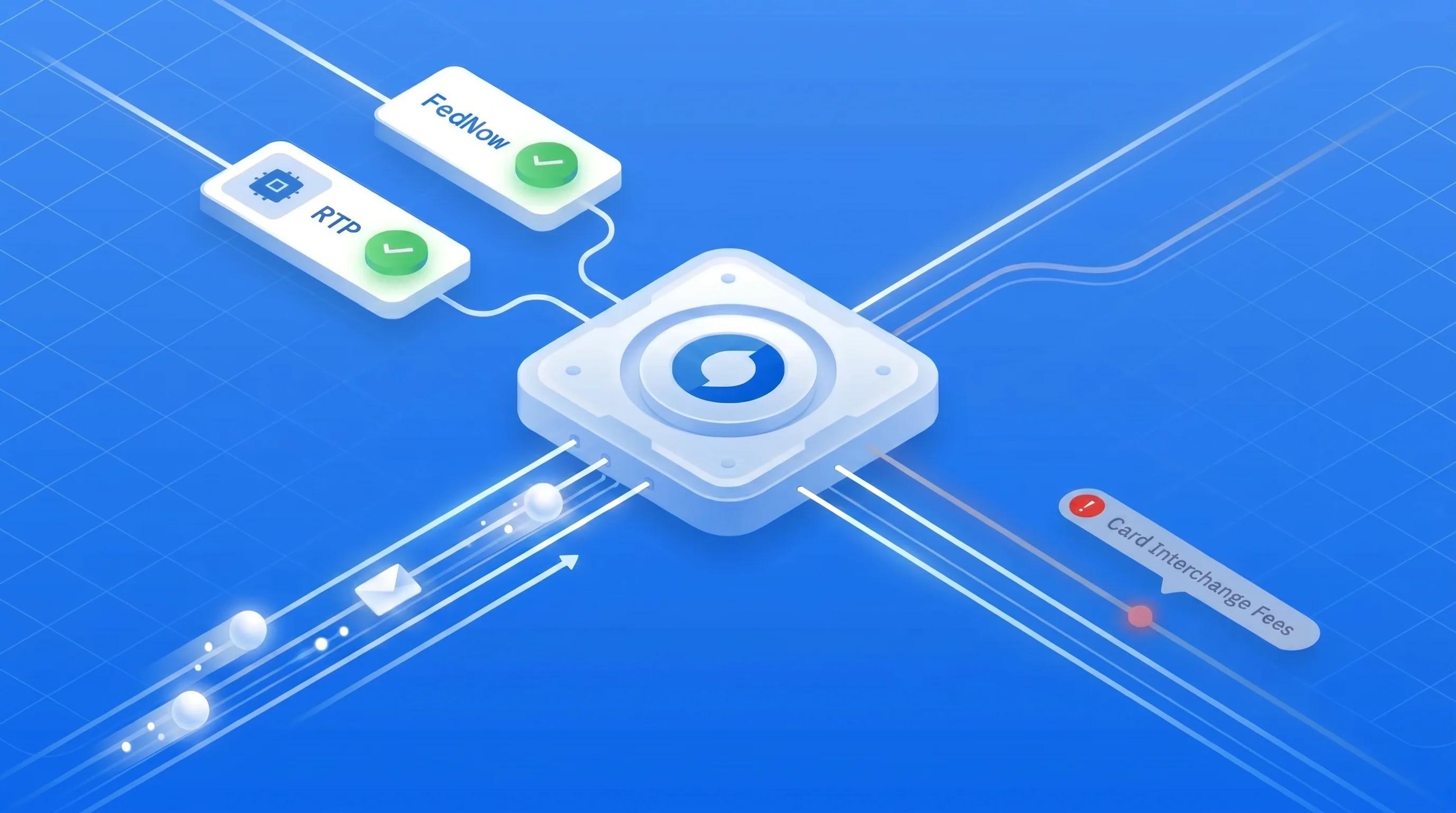
- FedNow and RTP as the US cost layer: For US merchants, Hyperswitch routes transactions over both FedNow and RTP by The Clearing House, selecting based on which network reaches the customer's bank. This is the same dual-rail approach Walmart uses through Fiserv's NOW Network. Enabling it through Hyperswitch requires configuration, not a new integration.
- UPI, Pix, and SEPA Instant for cross-border and global volume: new global rails second. The same integration that covers FedNow and RTP also covers UPI, Pix, and SEPA Instant. A merchant expanding into any of these markets does not build a new integration. They enable a connector.
- Geography-aware routing across all rails: A US customer routes to FedNow or RTP. An Indian customer routes to UPI. A Brazilian customer routes to Pix.
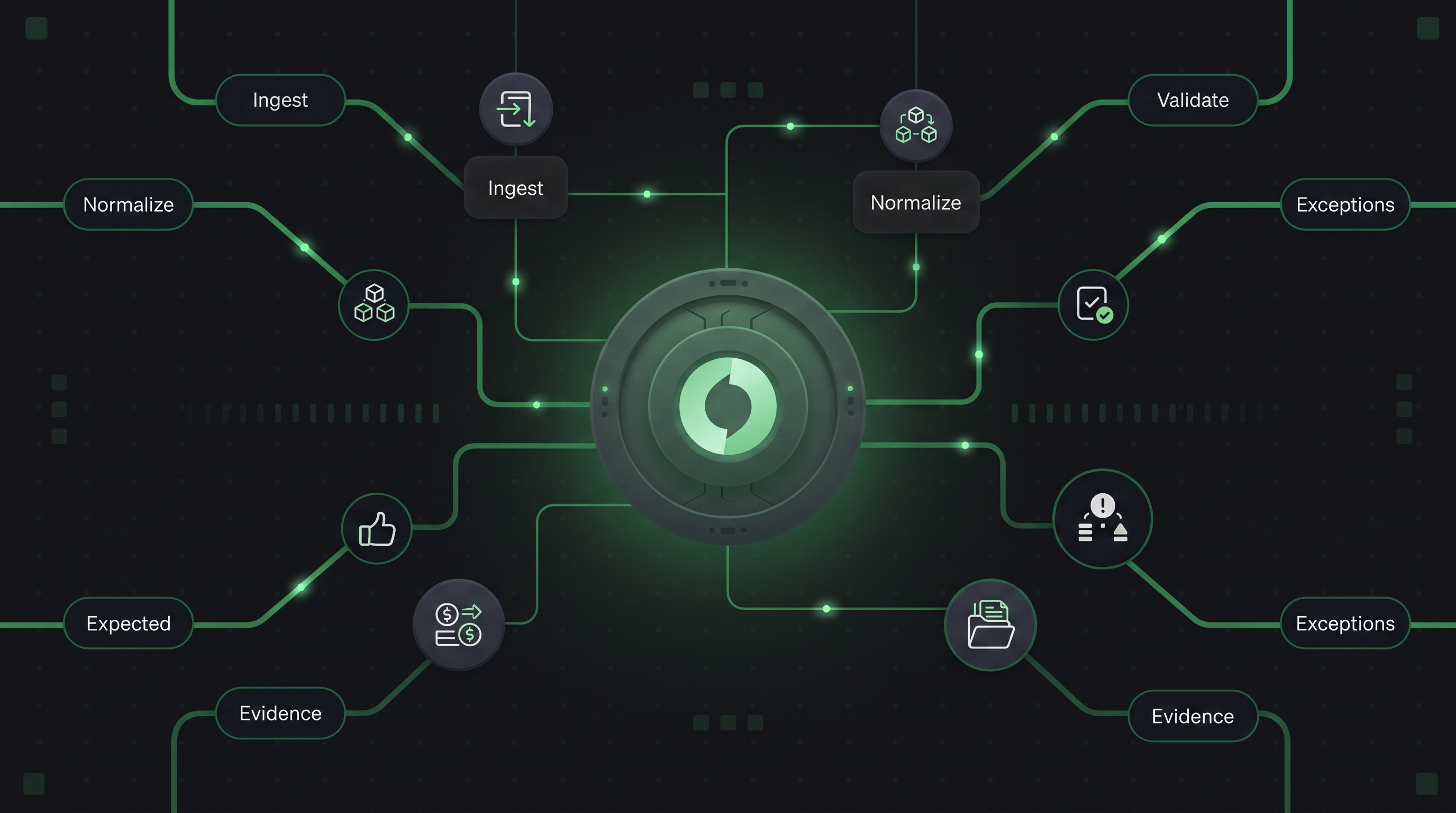
- Unified settlement reporting: Every rail produces settlement data in a different format on a different cadence. Hyperswitch normalizes data from all connected rails and card networks into a single reporting schema. The per-rail reconciliation work that makes multi-rail operations expensive without orchestration disappears.
- Rail-appropriate dispute workflows. A FedNow refund and a Visa chargeback are handled through the same merchant interface, with the correct process path for each rail surfaced automatically.
Key Takeaways
- US merchants paid $198.25 billion in card swipe fees in 2025, up 80% since 2020. The November 2025 Visa/Mastercard settlement and the Credit Card Competition Act have not changed the structural economics. Real-time rails are the only available alternative that eliminates interchange.
- Walmart launched pay-by-bank over FedNow and RTP in 2025, routing transactions through Fiserv's NOW Network. The Federal Reserve's own research estimates merchants can save 40% to 85% in fees vs credit cards using pay-by-ban.
- In India: UPI - 22.64 billion monthly transactions and Brazil: Pix - 64 billion transactions in 2024, real-time rails displaced cards on economics alone. The US is earlier on that curve, not on a different one.
- FedNow's primary US growth in 2026 is in B2B payments, earned wage access, bill payment via Request for Payment, and high-value retail. Consumer e-commerce checkout follows as bank-side consumer integration expands.
- FedNow now covers over 1,700 participating institutions, transaction volume grew 645% year-on-year through 2025, and the per-transaction limit was raised to $10 million in November 2025
- Payment orchestration converts multi-rail support from a multi-quarter build to a configuration change. One API integration covers all rails.
Frequently Asked Questions
How much are US merchants actually paying in card fees?
US merchants paid $198.25 billion in total credit and debit card swipe fees in 2025, a record high and roughly double the amount from a decade ago. Visa and Mastercard credit cards alone accounted for $118.8 billion of that. For context, the average US restaurant now lists card processing as its third-highest operating cost after food and labor.
What is pay-by-bank and how is it different from a card payment?
Pay-by-bank is an account-to-account payment where the customer's bank account is debited directly and the merchant's bank account is credited, without a card network in the middle. There is no interchange fee because there is no card network. In the US, pay-by-bank transactions route over real-time rails (FedNow or RTP) for instant settlement, or over ACH for next-day settlement. Walmart's 2025 implementation routes over FedNow and RTP for instant settlement.
Is FedNow actually being used, or is it still theoretical?
FedNow covers over 1,700 participating institutions as of April 2026, transaction volume grew 645% year-on-year through 2025, and the total payments value flowing through the system grew 2,134% over the same period. The average transaction value in Q1 2026 was approximately $99,000, indicating commercial and high-value use is already the dominant use case. Consumer checkout is the lagging segment, not the leading one.
What does UPI in India have to do with a US merchant's payment strategy?
India and Brazil are the proof of concept for what the US is building toward. Both markets had functioning card infrastructure before real-time rails launched. Both markets saw real-time rails become dominant payment channels because the economics favored them: zero interchange, instant settlement, higher domestic authorization rates. US merchants with Indian or Brazilian customer volume are already operating in markets where UPI and Pix are the default. Merchants without those integrations are offering a card-first checkout to customers who use cards as a fallback,
not a preference.
How does Pix compare to credit card acceptance for Brazilian e-commerce?
Pix processed 64 billion transactions in 2024, 80% more than the combined total of all card transactions in Brazil that year. Merchant acceptance cost is near zero versus 1.5% to 2.5% for cards. Settlement is instant versus T+1 to T+2. Authorization rates are higher for bank-authenticated transfers than for card-present and card-not-present transactions for domestic Brazilian consumers. For merchants with meaningful Brazilian customer volume, card-only checkout is the more expensive, lower-converting option.
How does payment orchestration help merchants support multiple real-time rails?
Each real-time rail has a different API, authentication model, settlement reporting format, and dispute process. Adding UPI, Pix, FedNow, and SEPA Instant as separate direct integrations is an extended engineering project. Orchestration abstracts each rail behind a common API: a merchant integrated with Hyperswitch can enable any rail through configuration, with routing logic selecting the appropriate rail based on customer geography, transaction type, and merchant setup. Settlement data from all rails normalizes into a single reporting schema, and dispute workflows surface the correct process path for each rail through the same merchant interface.