A payment gateway and a payment orchestrator solve different problems. The terms are routinely conflated in vendor pitches, and the conflation has economic consequences. A merchant doing USD 5 million annual GMV through a single gateway is in the right architectural place. A merchant doing USD 50 million GMV through that same single gateway is leaving 12 to 15 percentage points of authorization rate on the table during peak loads, paying up to 8% more in blended processing fees, and carrying a single-point-of-failure outage risk that can cost millions on Black Friday.
This guide explains what each component actually does, how they relate (orchestrators sit above gateways, not instead of them), the technical and economic differences, and the specific signals that tell a merchant when to add an orchestration layer.
The Quick Answer
A payment gateway is the software layer that captures payment credentials at checkout, encrypts them, and transmits them to the payment processor for authorization. It connects the merchant's checkout to a single processor or acquirer. A payment orchestrator sits one level above multiple gateways and processors, routing each transaction to the best provider based on country, currency, payment method, cost, and real-time success rates. A gateway handles one transaction through one provider. An orchestrator coordinates many transactions across many providers behind a single API. They are complementary, not competing: a merchant typically uses an orchestrator on top of multiple gateways.
The Core Difference in One Table
| Dimension | Payment Gateway | Payment Orchestrator |
| Primary function | Captures and securely transmits payment data to one processor | Routes each transaction to the optimal processor among many |
| Number of providers it connects | One processor / acquirer | Multiple processors, acquirers, gateways, alternative methods |
| Layer in the stack | Bottom layer (between checkout and processor) | Top layer (above multiple gateways) |
| Smart routing | No (sends to its single processor) | Yes (rule-based, dynamic, cost-based) |
| Fallback / cascading retries | Limited or none | Yes (auto-retry on different processor when one fails) |
| Local payment methods globally | Limited to provider's footprint | Broad, via multiple regional connectors |
| Vendor lock-in | High (re-platforming to switch) | Low (swap providers without changing checkout) |
| Best for | Single market, single provider, sub-USD-5M GMV | Multi-market, multi-provider, USD 5M+ GMV |
| Setup complexity | Lower (one integration) | Higher (orchestration layer plus gateways) |
| Per-transaction cost | Provider's MDR + gateway markup | Same MDR, plus orchestration fee, often offset by routing savings |
What a Payment Gateway Actually Does
A payment gateway is the software interface between the merchant's checkout and a payment processor. The gateway's responsibilities, end to end:
- Capture: Render checkout fields (often as iframes or hosted fields) so the customer's card data is collected without the merchant's server touching raw PAN.
- Tokenize: Convert the card number into a non-sensitive token for storage and reuse.
- Encrypt and transmit: Send the tokenized authorization request over TLS to the processor.
- Authorize: Wait for the processor's response (approve or decline) and return it to the merchant's checkout.
- Settle (in some bundles): Hand off batched authorizations to the processor for clearing.
- Webhook events: Notify the merchant of subsequent state changes (refunds, disputes, chargebacks).
In modern API-based platforms (Stripe, Adyen, Worldpay, Checkout.com, Braintree), the gateway is built into the processor's stack, so the gateway and processor function as a single product to the merchant. In legacy environments, the gateway and processor were sold separately by different vendors. Either way, a gateway connects to one processor at a time. A merchant using two providers needs two gateways.
What a Payment Orchestrator Actually Does
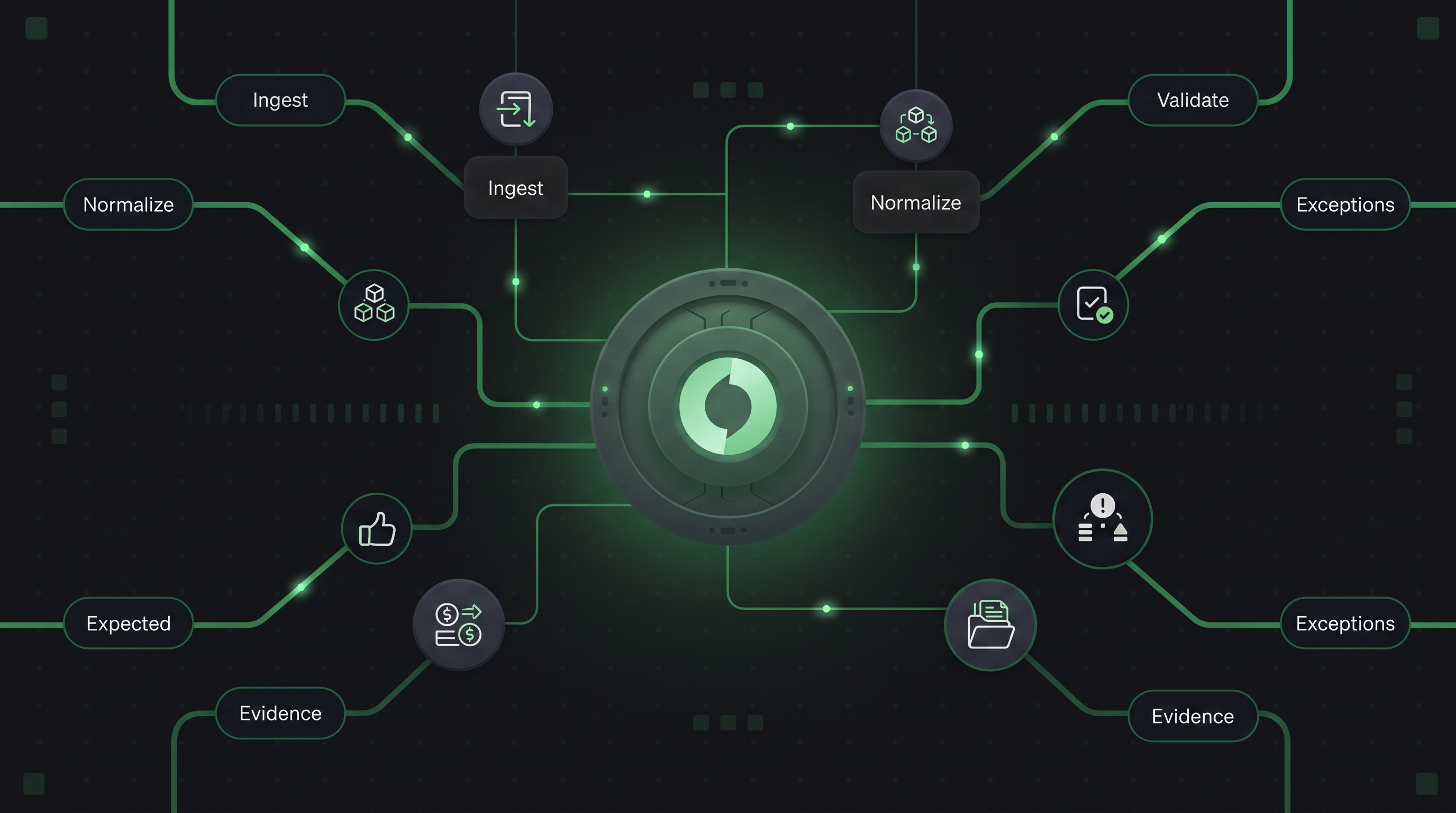
A payment orchestrator is a routing and coordination layer that sits above multiple gateways. The orchestrator's responsibilities:
- Unified API: Expose one set of endpoints to the merchant's checkout that abstracts the differences between underlying gateways (Stripe vs Adyen vs Worldpay APIs are all reached through one orchestrator API).
- Smart routing: Decide which gateway handles each transaction based on configurable rules: country, currency, payment method, BIN, amount tier, real-time success rate, processor health, or contractual commitments.
- Cascading retries: When a transaction is declined on one gateway, automatically retry on a different gateway based on decline reason and historical performance for that profile.
- Local payment method coverage: Connect to regional acquirers and APMs (UPI in India, Pix in Brazil, iDEAL in Netherlands, Bancontact in Belgium) that no single gateway covers globally.
- Vault and tokenization: Store payment credentials in a provider-neutral format so switching gateways does not require re-collecting card data from customers.
- Reconciliation and analytics: Normalize fee data, settlement reports, and decline reasons across multiple gateways into one merchant-facing view.
- 3DS and fraud orchestration: Apply 3DS 2.2 logic and fraud-screening rules consistently across all gateways.
The orchestrator does not replace the underlying gateway. It coordinates many of them.
The Five Concrete Differences That Matter
1. Authorization Rate
A single-gateway setup sends all transactions through one acquirer. A multi-gateway orchestration setup routes each transaction to the acquirer most likely to approve it. Industry data shows merchants using two or more gateways see 12 to 15 percentage-point increases in authorization rates during peak sales. Smart routing plus cascading retries together typically deliver 14.8% LTV impact on average, plus an additional 11.6% from retry recovery on soft declines.
2. Processing Cost
A single gateway charges a fixed MDR. An orchestrator routing to the lowest-cost qualifying processor cuts blended fees by up to 8%. Adyen's intelligent routing pilot delivered 26% cost savings on US debit transactions in 2024 across enterprise merchants including eBay, Microsoft, and 24 Hour Fitness. The orchestration fee itself is typically lower than the savings from routing, especially above USD 50 million in GMV.
3. Outage Resilience
A single gateway is a single point of failure. When that gateway has an outage during a peak shopping window, the merchant cannot process payments at all. An orchestrator with multiple gateways auto-fails over to a backup, often within seconds. For any merchant where a 30-minute outage represents more than USD 100,000 in lost sales, redundancy via orchestration pays for itself many times over.
4. Geographic Reach
No single gateway dominates every market. Stripe is strongest in North America and EU. Adyen is strongest in EU and APAC. Razorpay leads in India. Stone or Cielo lead in Brazil. A merchant selling globally on a single gateway forfeits 30 to 60% of addressable spend in markets where the gateway lags. An orchestrator with regional connectors closes that gap by routing each market's traffic to the right local processor.
5. Vendor Optionality
Gateway lock-in is structural: proprietary tokens that other providers cannot decode, proprietary webhook formats, contractual auto-renewal clauses. 40% of merchants report feeling "trapped" by their current processor. An orchestrator with provider-neutral tokenization and a unified API turns gateway-switching from a multi-quarter project into a configuration change. Adding a second processor takes hours, not weeks.
When a Single Gateway Is Enough
Not every merchant needs an orchestrator. The cases where a single gateway is the right architecture:
- Annual GMV under USD 5 million. The operational complexity of orchestration usually exceeds the gains until volume crosses this threshold.
- Single market, single currency. A US-only direct-to-consumer brand selling on Stripe is structurally different from a global marketplace.
- No engineering capacity for additional integration. Even though orchestrators reduce per-gateway integration work, adopting one still requires technical effort.
- Stable, predictable transaction profile. Merchants without significant fluctuation in card mix, geography, or volume see less benefit from dynamic routing.
For these merchants, picking the right single gateway (Stripe for SMB and SaaS, Adyen for enterprise omnichannel, Worldpay for in-person retail, etc.) is the correct strategic move.
When an Orchestrator Becomes Necessary
The signals that orchestration is the right call:
- Annual GMV above USD 5 million and growing. The savings from routing and recovery compound with scale.
- Multi-market or multi-currency operations. Each new market typically needs at least one local payment method or acquirer.
- High-ticket transactions where authorization rate matters. A 2% authorization improvement on USD 50 million GMV is USD 1 million.
- Significant chargeback or fraud exposure. Orchestrators integrate fraud providers and apply consistent risk rules across all gateways.
- Vendor concentration concerns. A single-gateway outage is no longer tolerable as a business risk.
- Complex routing requirements. "Send US debit to Acquirer A; route Indian UPI to Razorpay; send EU credit above EUR 500 through 3DS exemption logic" is impossible without an orchestration layer.
For merchants in this profile, orchestration is no longer an optimization. It is core infrastructure.
The Cost Picture: When the Orchestration Fee Is Worth It
Orchestrators charge a per-transaction fee, typically 0.05 to 0.5% on top of the underlying gateway MDR. For an average USD 100M GMV merchant, the math:
| Scenario | Cost / Benefit |
| Orchestration fee at 0.15% of GMV | ~USD 150,000 annual cost |
| 8% blended MDR savings via smart routing | ~USD 200,000 annual savings |
| 2% authorization rate uplift | ~USD 2,000,000 incremental revenue |
| Avoided outage downtime | Variable, often USD 100K+ per major incident |
| Faster regional expansion (no per-gateway integration) | 6 to 12 months saved engineering |
The orchestration fee is generally a small fraction of the gain, particularly above USD 50M GMV. Below USD 5M GMV, the math reverses and a single gateway is cheaper net.
Common Misconceptions
Misconception 1: "An orchestrator replaces my gateway." False. An orchestrator sits above gateways. The merchant still has gateway and processor relationships; the orchestrator coordinates them.
Misconception 2: "We can build orchestration in-house." Possible but expensive. Building a production orchestration layer (multi-gateway integration, vault, routing engine, fraud orchestration, reconciliation) typically takes 6 to 18 months of focused engineering and ongoing maintenance. Most merchants find the buy-vs-build math favors buy above USD 50M GMV.
Misconception 3: "Modern gateways do everything an orchestrator does." Some gateways (Adyen, Stripe) offer multi-acquirer routing within their own platform. This is not the same as multi-vendor orchestration: the merchant is still locked into one platform's pricing, terms, and processor relationships. True orchestration requires vendor neutrality.
Misconception 4: "Orchestration adds latency." Modern orchestrators add 20 to 50 milliseconds of overhead, which is small relative to the processor's own 800 to 2,500 ms. The latency cost is rarely material.
Frequently Asked Questions
What is the difference between a payment gateway and a payment orchestrator? A payment gateway captures and securely transmits payment data from the merchant's checkout to a single payment processor. A payment orchestrator sits above multiple gateways and processors, routing each transaction to the optimal one based on country, currency, payment method, cost, and real-time success rates. A gateway handles one transaction through one provider; an orchestrator coordinates many transactions across many providers. They are complementary, not competing.
Do I need a payment orchestrator? Generally not below USD 5 million annual GMV. Above that threshold, the case for orchestration becomes strong: smart routing lifts authorization rates 12 to 15 percentage points during peak loads, smart retries recover 20 to 30% of declined transactions, blended fees drop up to 8% via cost-aware routing, and outage redundancy eliminates a major business risk. Above USD 50 million GMV, orchestration is no longer an optimization but core infrastructure.
Can a payment orchestrator replace my payment gateway? No. The orchestrator sits above gateways; it does not replace them. The merchant still has gateway and processor relationships; the orchestrator coordinates them. A typical setup has 2 to 5 underlying gateways behind one orchestrator that routes traffic across them.
How much does payment orchestration cost? Orchestrators typically charge 0.05 to 0.5% per transaction on top of the underlying gateway MDR. For a USD 100M GMV merchant, that is USD 50K to USD 500K in annual orchestration fees, typically offset many times over by 8% MDR savings, 2% authorization rate uplift, and avoided outage costs.
What is smart routing in payment orchestration? Smart routing is the practice of directing each transaction to the optimal payment processor based on configurable rules and real-time data. The six common strategies are priority routing (ordered fallback), volume split routing (percentage-based distribution), advanced rule-based routing (e.g., "if country = US AND amount > 500, use Stripe"), dynamic success-based routing (highest live approval rate), elimination-based routing (filter unhealthy processors), and contract-based routing (honor commercial commitments).
Does using an orchestrator add latency to checkout? Modern orchestrators add 20 to 50 milliseconds of application-layer overhead, which is small relative to the processor's own 800 to 2,500 ms latency. The end-to-end checkout experience is rarely affected. The latency is more than compensated by higher authorization rates and better customer experience from successful payments.
Are payment orchestrators secure? Yes, when properly designed. Reputable orchestrators operate as PCI DSS Level 1 Service Providers (the highest tier), use hosted fields to keep raw card data outside the merchant's environment, encrypt all data in transit and at rest, and apply consistent 3DS 2.2 and fraud-screening logic across all underlying gateways. Self-hosting open-source orchestrators allows merchants to keep PII inside their own infrastructure for data-residency compliance.
Can I switch payment processors easily with an orchestrator? Yes. With provider-neutral tokenization and a unified API, switching or adding a processor in an orchestrated stack is typically a configuration change in the orchestrator's dashboard, not an engineering project. The same merchant integration code remains in place; only the underlying provider changes. This is one of the largest structural advantages of orchestration over single-gateway lock-in.
The Bottom Line
A payment gateway is the software layer between the merchant's checkout and a single payment processor. A payment orchestrator sits one level above multiple gateways and routes each transaction to the optimal one. They are not interchangeable terms. They are not competing technologies. They are complementary layers of the modern payment stack.
For merchants below USD 5 million annual GMV, picking the right single gateway is the correct architectural move. Above that threshold, the math reverses: smart routing across multiple gateways lifts authorization rates 12 to 15 percentage points, cuts blended fees up to 8%, eliminates outage downtime, and unlocks regional payment methods that no single gateway covers. The orchestration fee is typically a small fraction of the gain.
The strategic question is no longer whether to use a gateway or an orchestrator. It is when to add the orchestration layer above the gateways already in place.